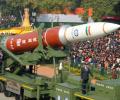
'The government must provide more funds to enable the armed forces to fight and win tomorrow's wars,' states Brigadier Gurmeet Kanwal (retd).
Taking strong exception to complaints and grievances of people concerning the customs and excise sectors, Prime Minister Narendra Modi on Wednesday said strict action would be taken against erring officials.
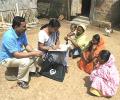
The NPR data can be used for transparent and efficient delivery of social benefits by linking it with various beneficiary oriented government schemes, they said.

Auto-debit payment bounces have gone up for the second consecutive month in May, emphasising the stress building up due to a halt in economic activities as authorities lock down various parts of the country to stop the spread of the virus in the second wave. According to the National Automated Clearing House (NACH) data, in May, of the 85.7 million transactions initiated, 35.91 per cent, or 30.8 million transactions, failed.

Besides opening up the possibility of a policy that allows vintage cars retrofitted with electric batteries to ply on roads, this also gives a clue to how cars older than 15 years that are banned can be valued again by a similar conversion to EVs, says Ritwik Sharma.

'MFs have a combined exposure of Rs 3.2 lakh crore to NBFCs, out of which Rs 1.1 lakh crore matures by September 2019.'

Sports Minister Kiren Rijiju said all pending complaints of sexual harassment at SAI institutes will be disposed off

The Budget touches a few highs and lows as far as personal finance is concerned, and one needs to be aware of them in order to optimise on one's investment plans.

'People do not want a 'maha milavat' (highly adulterated) government of those who assembled in Kolkata.'
The document, shared by the prime minister on the occasion of the first anniversary of his second term on his Twitter account and web portal, detailed the steps taken by his government for the progress and development of the country. The document is divided into 15 heads ranging from ease of doing business, ease of living, to eliminating corruption and the country's fight against coronavirus.

Stating that pushing GDP growth, which has slipped to 5-year low of 6.8 per cent in 2018-19, is the top priority, President Ramnath Kovind said Modi govt will bring more reforms and raise farm investments to boost growth.

It is worrisome that salaries are consuming as much expenditure as equipment.

Tokyo residents are deeply divided on whether they should go ahead with the Olympics mid-pandemic

Even as Chinese troops continue squatting on territory that we claim as our own -- this was the lowest allocation for defence in percentage terms since the 1950s, reveals Ajai Shukla.

The abolition of wealth tax is again a welcome step.

'If Modi is talking to every Tom, Dick and Harry, why is he afraid of talking to ex-servicemen?'

WhatsApp on Wednesday said it expects to facilitate the purchase of "affordable sachet-sized" health insurance through its platform by the end of the year as part of its efforts to provide users in India with greater access to financial solutions. The Facebook-owned company noted that its 'Payments' feature is now available to users across the country (currently up to 20 million users) with support from banking partners - State Bank of India, HDFC, ICICI and Axis Bank.

The meeting will review annual financial performance of public sector banks, credit offtake in the economy, priority sector lending and progress made under various social sector schemes, including Atal Pension Yojana (APY) and Pradhan Mantri Jan Dhan Yojana.

The independent institute advising the PM on jobs seems to have missed the point that the challenge is to create net additional jobs, says Mahesh Vyas.

Consumers will thank the Modi government for this simple yet revolutionary move, which is long overdue, says Debashis Basu.

He cautioned people against forces inside and outside India which are working against the country by targeting it and its constitutional values.
The announcement comes on the first anniversary of the project.

Director of the US National Institute of Allergy and Infectious Diseases, Dr Fauci said that India made the "incorrect assumption" that they were finished with COVID-19.
She said that despite government scheme and initiatives ranging from roads to agriculture, housing, scholarships to electricity benefiting lives of people, a false narrative was being created by the opposition that the government was working for cronies.
Later, there may be some tax relief aimed at the middle class and measures to benefit the sectors worst hit by Covid-19 and the resultant nationwide lockdown.

Deadline to submit convincing reform plans is this week.


West Bengal was the second-most industrialised state in terms of value added and first in terms of number of factories and employment even in the mid-1960s. With a severe and long process of deindustrialisation, it lost its primacy.

Prime Minister Modi made a strategic blunder of Nehruvian proportions -- presuming no war can happen now, and the Chinese won't be a military threat and risk their economic interests, observes Shekhar Gupta.

The minister plans to reinstate the Railways as the backbone of the economy

Railways to hive off all production units and workshops into new govt-owned company; may invite bids from private players to run passenger trains in next 15 days, with ownership vesting with the government.
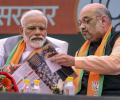
Rediff.com does a quick checklist on what the two manifestos have to say on hot-button issues of the day.

It will be interesting to see whether India-China border tensions figure during the deliberations of PLA deputies to the NPC and CPPCC, notes Jayadeva Ranade, the distinguished China expert and retired RA&W officer.

'The non-implementation of the Seventh Pay Commission, almost a year after it was implemented for civilians, is gradually beginning to hurt morale in the armed forces,' says Brigadier Gurmeet Kanwal (retd).

Yoga sessions will be organized for central government employees and their dependents by the 'Grih Kalyan Kendra', a welfare society working under the aegis of the Centre.
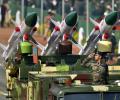
Most of the scanty 6.35% rise in the defence budget is accounted for by manpower and running expenses.
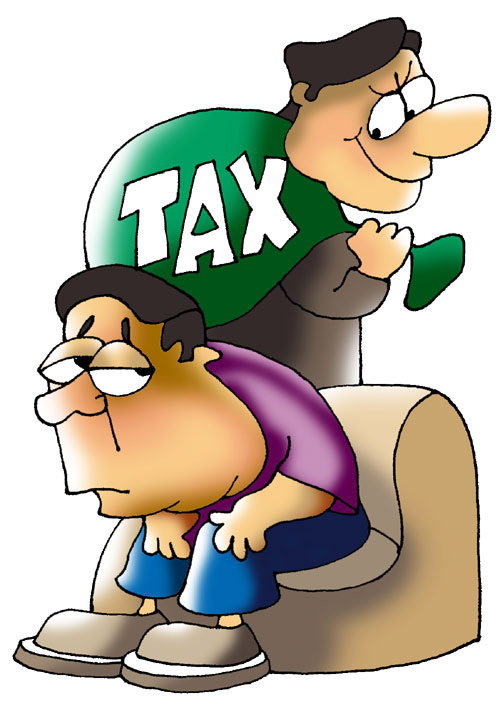
Many exemptions make little sense, such as a monthly exemption of Rs 100 for college education and Rs 300 for hostel fees.
After assuming power in 2014 with a full majority of its own, the BJP-led NDA government started an ambitious process of reforming labour laws in the form of codes aimed at making the framework less cumbersome with a variety of alterations. It had planned four codes each for industrial relations, wages, social security and welfare, and occupational safety, health and working conditions. To this end, 35 central labour laws were to be converted into four codes that would have had the virtue of streamlining labour relations. But none of the proposed code Bills could be converted into a law principally because neither trade unions nor industry representatives came on board. They hold the key to India's low-growth-high unemployment paradigm but the government may struggle to push them through this time as well. Somesh Jha explains why

A way out of the economic slump is to revisit the template of 15 years ago and follow its constituents, recommends Ajay Shah.

The march, which commenced from Nashik on March 6, will culminate in Mumbai on Monday and protestors plan to gherao the Vidhan Bhavan where the Budget session of the state legislature is underway, said organisers.
